
Enterprise AI Architecture
Technical strategy, customer discovery, executive demos, proofs of concept, product feedback loops, and deployment paths for complex data environments.
Hybrid AI, knowledge graphs, and decision systems
I build & architect AI systems that connect LLMs, knowledge graphs, predictive models, optimization, and enterprise data platforms. My work spans scientific computing, staff-level data science, customer-facing architecture, and production-minded AI workflows.
I help turn ambiguous technical and business problems into scoped, testable systems: enterprise AI strategy, customer discovery, proof-of-concept builds, graph-native modeling, LLM workflows, remote team leadership, and deployment planning.
Technical strategy, customer discovery, executive demos, proofs of concept, product feedback loops, and deployment paths for complex data environments.
LLM workflows, knowledge graphs, relational reasoning, graph analytics, forecasting, optimization, evaluation records, and model iteration.
Technical writing, Snowflake ecosystem demos, reference implementations, and research ideas turned into examples people can inspect and adapt.
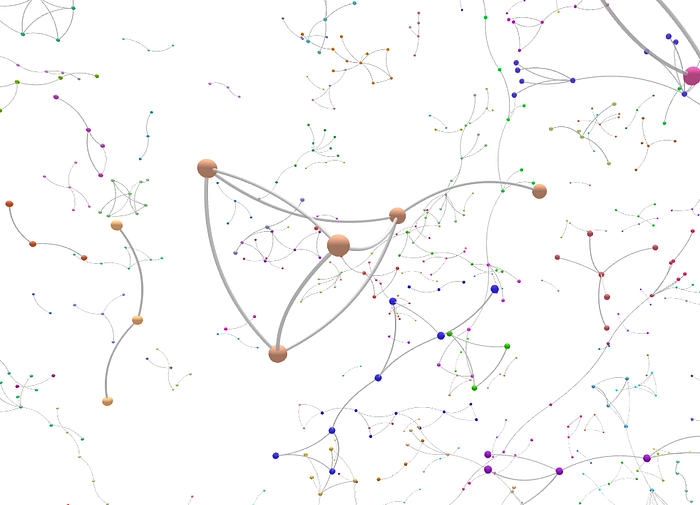
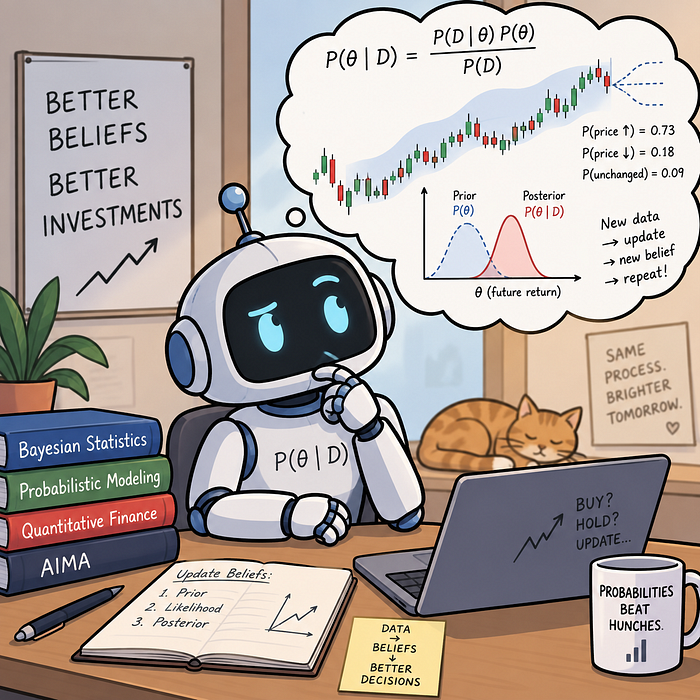
Lead customer strategy, executive-facing demonstrations, and proofs of concept showing how graph analytics, rule-based reasoning, optimization, and AI workflows fit into enterprise data stacks.
Led applied AI projects and a six-person data science team, supported a larger Ph.D.-level organization, and partnered with Sales, Marketing, Product, and partner teams on launches and customer engagements.
Built graph and data-science systems for recommendation, next-basket prediction, sales forecasting, taxonomy mapping, semi-supervised clustering, and knowledge graph pipelines.
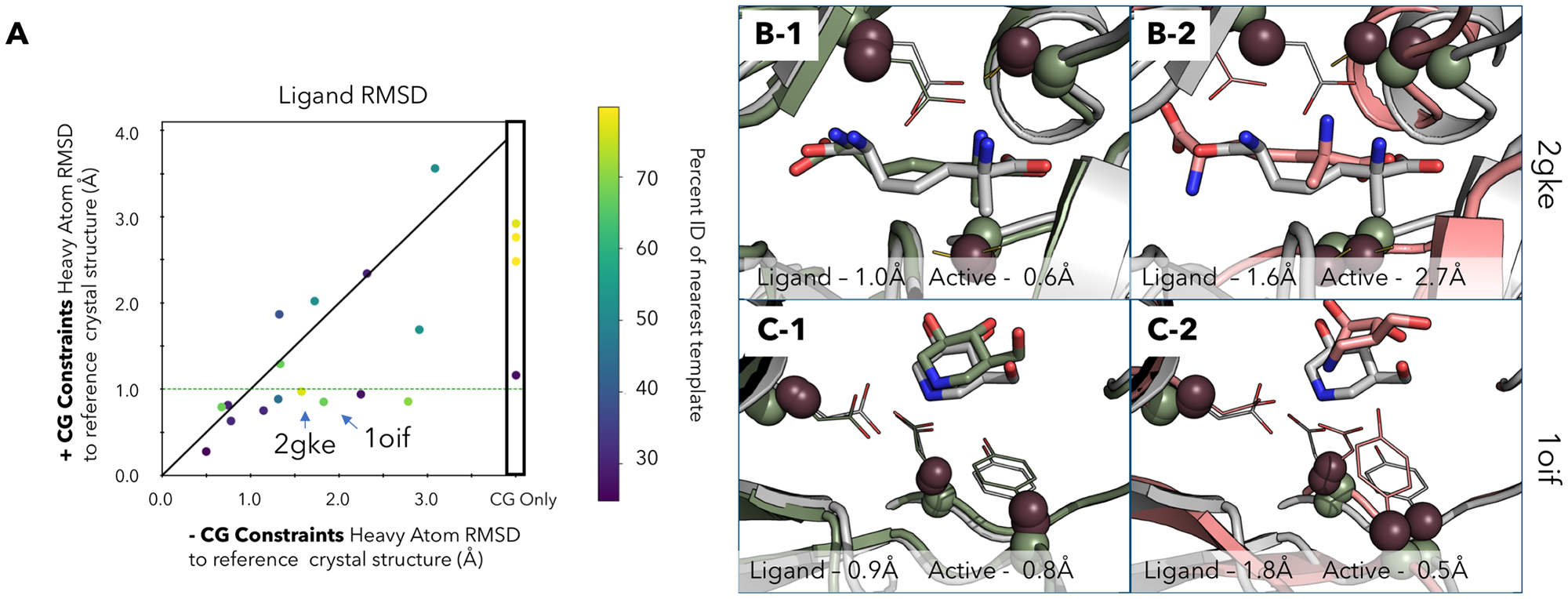
Developed computational methods for enzyme modeling by combining bioinformatics, structural informatics, and physics-based protein modeling in the Justin Siegel Lab.
I think AI is about automating things people do. I wrote more about the definitions and researchers that shape my thinking in What Is AI?, and keep a separate list of inspirations.
Before my industry AI work, I built computational tools for enzyme modeling and rational protein design. That research background still shapes how I think about uncertainty, constraints, evidence, and scientific communication.
Ph.D. thesis on computational enzyme modeling, geometric constraints, and rational protein design.
Read thesisNamed inventor on US Patent 10,829,756, "Discovery of enzymes from the alpha-keto acid decarboxylase family."
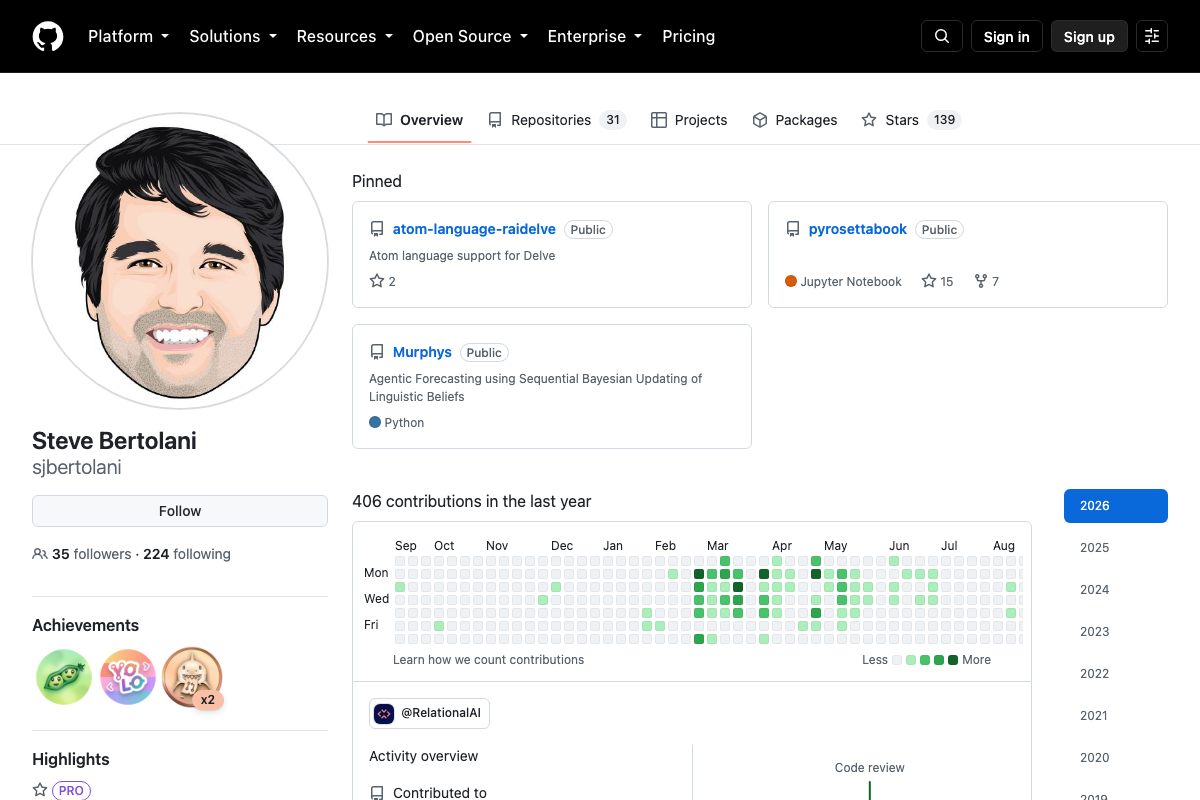
View patentFormer RosettaCommons developer with historical PR contributions; public GitHub includes scientific computing and developer tooling projects.
Rosetta CommonsTools and systems I have worked with recently or repeatedly.
Short version for intros, applications, speaker notes, and profiles.
Steve Bertolani is an AI systems architect and data scientist working at the intersection of LLMs, knowledge graphs, predictive modeling, optimization, and enterprise data platforms. His background spans computational chemistry, scientific computing, staff-level data science, customer-facing architecture, and production-minded prototyping. He focuses on turning ambiguous technical and business problems into scoped, testable systems that are explainable and useful in real enterprise environments.